

Overview
When you create a brand, Tedi automatically starts discovering comprehensive information about it using advanced Tedi Network capabilities and deep research to gather detailed insights about the target brand.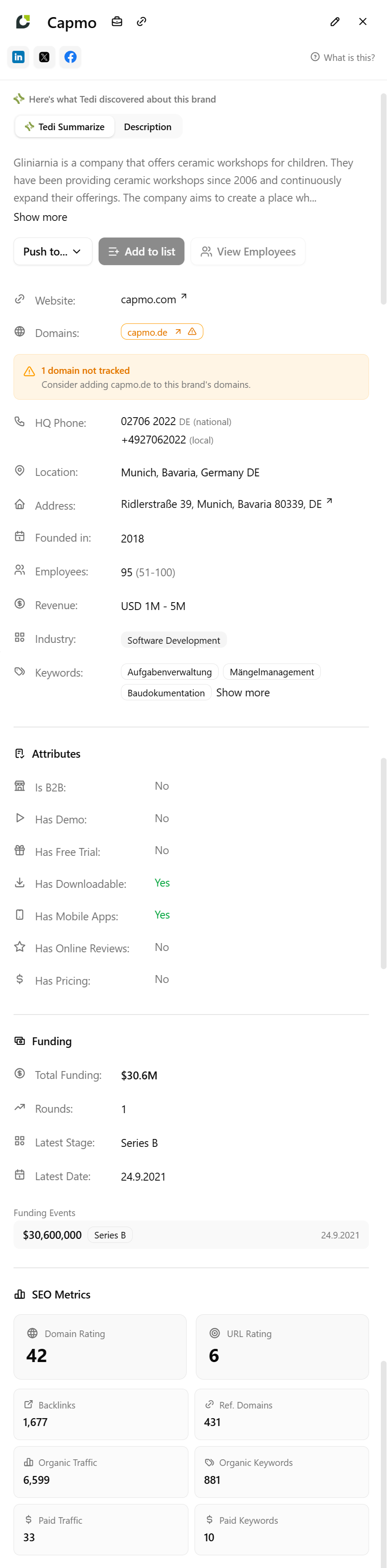
Why Brand Discovery Matters
Brand Discovery isn’t just about displaying information it directly enhances how AI Brand Monitor analyzes and reports on your competitive landscape. Below are the key benefits of Tedi’s Brand Discovery: 1. Discover Missing Domains Tedi automatically identifies domains associated with a brand that you might have missed. Adding these domains to your tracking ensures you capture all mentions-whether AI responses reference the main website, regional sites, or product-specific domains. Here is an example of how this works in practice: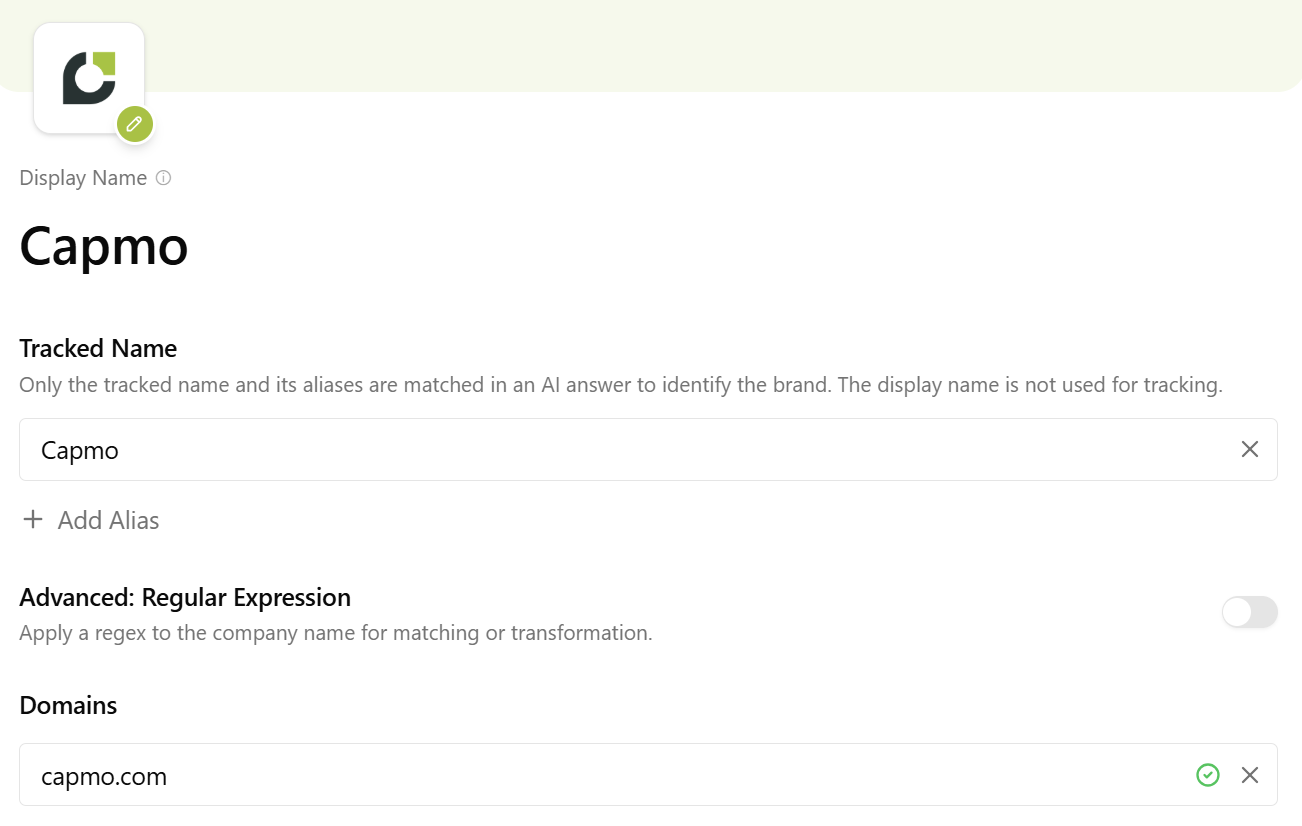
Tedi Discovers Missing Domains
Tedi automatically researches the brand and discovers that 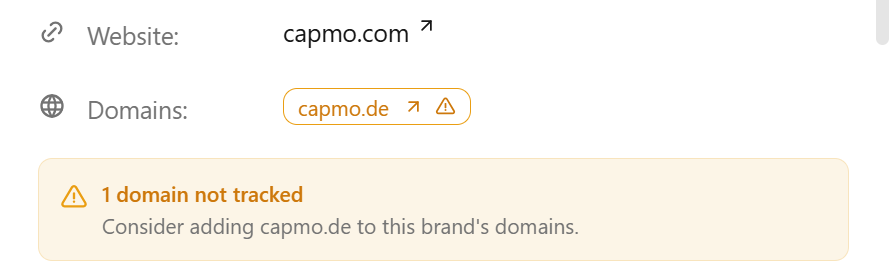
capmo.de is also associated with Capmo-a regional domain you didn’t add.Add the Missing Domain
Tedi displays the suggestion, but never modifies your brand domains automatically. You must manually add
capmo.de to your brand’s settings. This ensures you have full control over your tracking configuration.Once added, you’ll capture mentions from both capmo.com and capmo.de in AI responses.Without this discovery, you’d miss mentions when AI platforms reference the alternate domain-potentially underreporting your brand’s visibility.
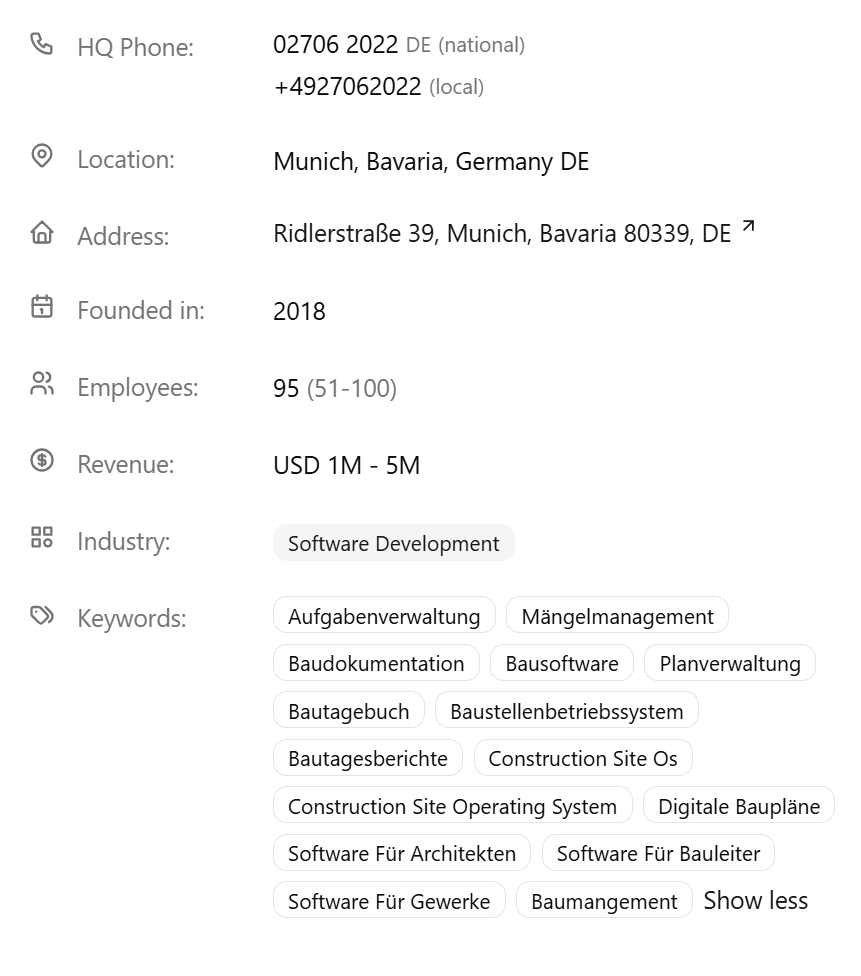
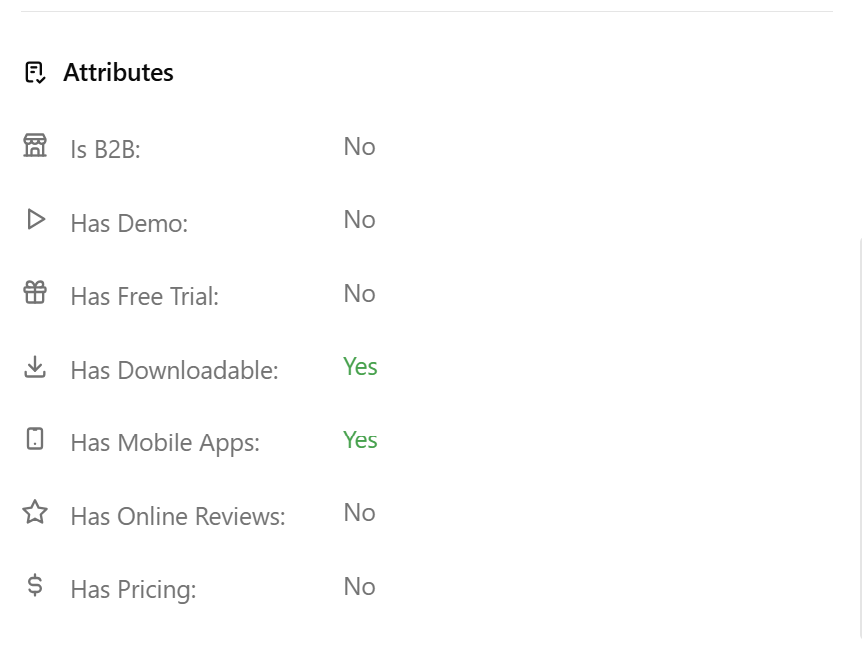
Example: A user asks ChatGPT for “construction management software with a mobile app.” Your brand doesn’t have mobile apps, but a competitor does. By checking the Attributes section, you can quickly see that the competitor has “Has Mobile Apps: Yes” while your brand shows “Has Mobile Apps: No”-this explains why they’re being recommended and you’re not.
Why it matters: AI platforms often cite social media as sources in their responses. If a competitor has a strong LinkedIn presence with thought leadership content, AI may reference their posts when answering industry questions. Knowing your competitors’ social footprint helps you understand where they’re building authority-and where you might be missing opportunities.

- Content amplification - Posts that get shared widely become part of the web content AI models learn from
- Brand authority signals - Active engagement on professional platforms like LinkedIn signals industry expertise
- Real-time relevance - Recent social activity can influence AI responses about current events or trends
- Identify neutrality issues in AI recommendations
- Spot potential sponsored behaviors that may not be disclosed
- Make data-driven decisions about where to focus your optimization efforts
Tedi Summary
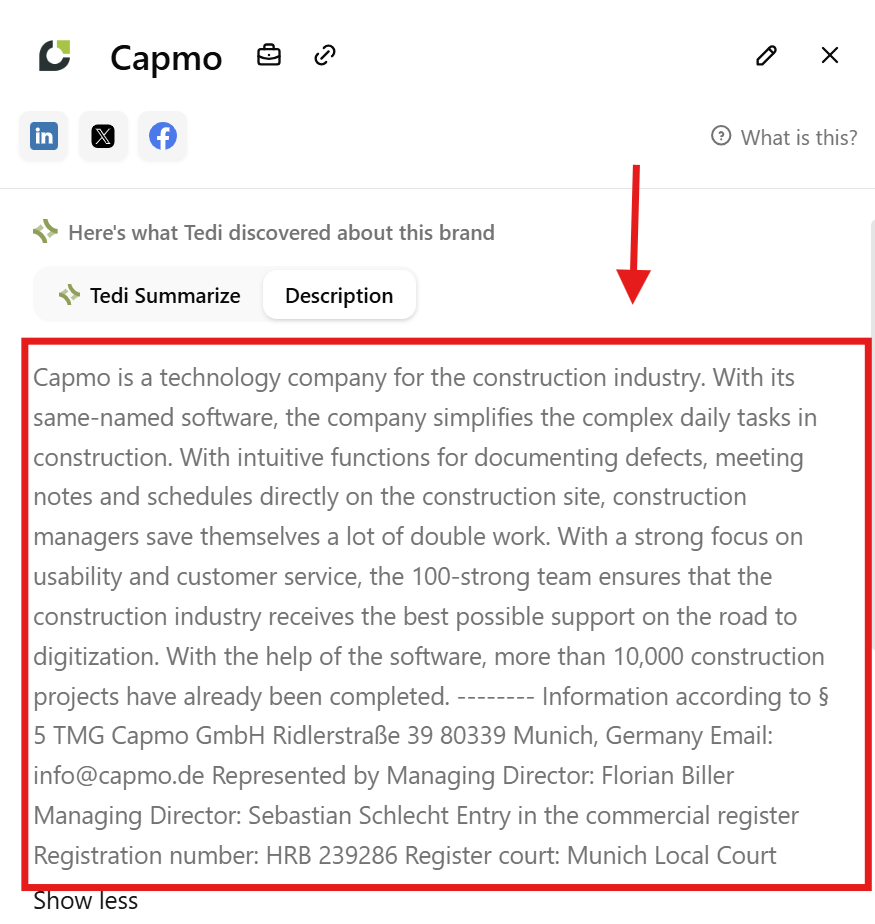
At the top, you’ll find an AI-generated summary that describes what the company does, powered by Tedi. Click “Show more” to expand the full description. This summary helps Tedi maintain context about each brand, enabling more accurate detection and sentiment analysis throughout your monitoring.Company Information
| Field | Description |
|---|---|
| Website | The brand’s primary website |
| Domains | Domain aliases such as regional sites or secondary domains (e.g., capmo.de for a German market) |
| HQ Phone | Headquarters phone number (national and local formats) |
| Location | City, region, and country |
| Address | Full physical address |
| Founded in | Year the company was established |
| Employees | Estimated employee count with range |
| Revenue | Estimated annual revenue range |
| Industry | Primary industry classification |
| Keywords | Business-related keywords describing the company - helpful for SEO |
Attributes
Quick yes/no indicators about the company’s offerings:| Attribute | What It Means |
|---|---|
| Is B2B | Sells to businesses (Business-to-Business) |
| Has Demo | Offers product demonstrations |
| Has Free Trial | Provides a free trial period |
| Has Downloadable | Offers downloadable software |
| Has Mobile Apps | Has mobile applications |
| Has Online Reviews | Has presence on review platforms |
| Has Pricing | Publicly displays pricing |
Why attributes matter: When AI platforms recommend “B2B CRM software with a free trial,” Tedi knows which brands match that criteria. Understanding these attributes helps explain visibility patterns in AI responses.
Funding
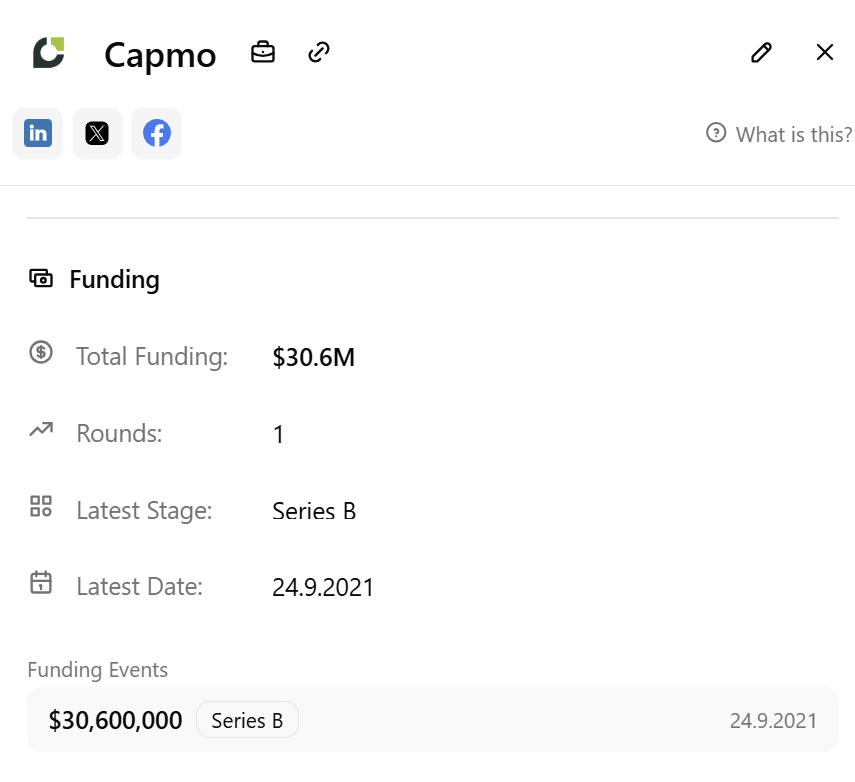
Track the financial backing of brands you monitor:| Metric | Description |
|---|---|
| Total Funding | Total capital raised |
| Rounds | Number of funding rounds |
| Latest Stage | Most recent funding stage (Seed, Series A, B, etc.) |
| Latest Date | Date of the most recent funding |
Why funding matters: Well-funded companies often invest heavily in content, PR, and brand awareness-all of which influence AI training data. When comparing yourself against competitors, funding context helps explain why some brands may have stronger AI presence despite similar product offerings.Example: If a competitor has backing from major investors like Microsoft or Apple, this enhances their credibility and trust signals. AI platforms may perceive these brands as more authoritative due to their association with established tech leaders.
SEO Metrics
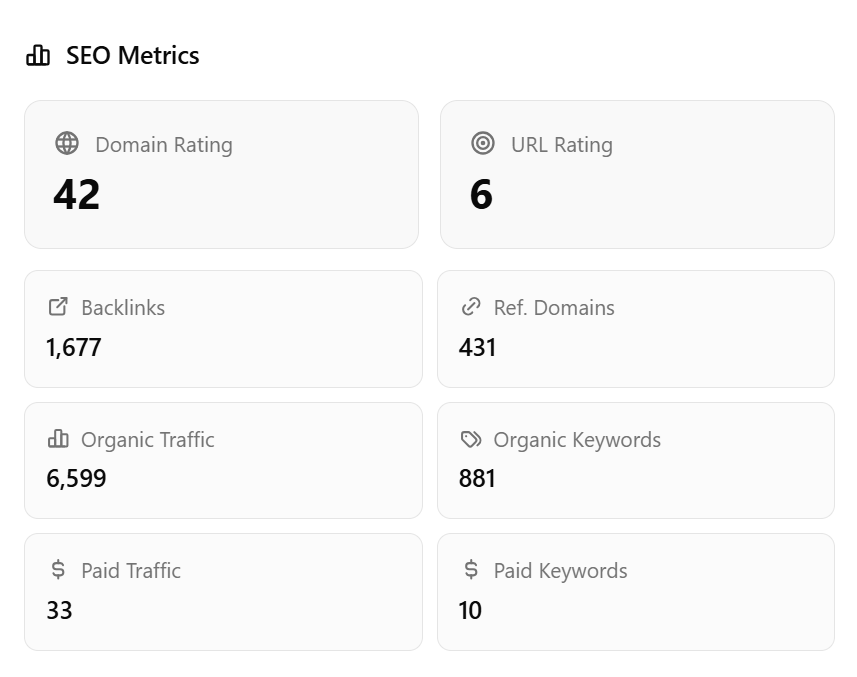
Understand the brand’s online presence with key SEO data:Authority Metrics
- Domain Rating - Overall domain authority score
- URL Rating - Page-level authority score
Link Profile
- Backlinks - Total number of backlinks
- Ref. Domains - Number of referring domains
Organic Performance
- Organic Traffic - Estimated monthly organic visitors
- Organic Keywords - Number of ranking keywords
Paid Presence
- Paid Traffic - Estimated paid search visitors
- Paid Keywords - Number of paid keywords
FAQ
How does Tedi collect information?
How does Tedi collect information?
Tedi uses advanced browser capabilities and deep research to power its discovery system. This includes navigating up to 50,000 browser tabs per second and conducting comprehensive web research.When you create a brand, Tedi typically needs 30 seconds to 1 minute to complete the research process.
What happens if I define wrong brand data?
What happens if I define wrong brand data?
Nothing critical happens. Brand Discovery is an informational feature, similar to action in our dashboard. It simply shows you:
- Gaps in your tracking configuration
- Missing domains you might want to add
- Comprehensive information about your brand and competitors
What is the 'View Employees' button?
What is the 'View Employees' button?